
In our hyper-digital world, the “always-on” grind for professionals has led to a desperate search for genuine stress relief. While traditional meditation is effective, many find sitting in silence surprisingly stressful. If you’re looking for a way to get started today, our creative craft kits for kids are designed to be the perfect screen-time alternative.
Enter plaster painting: a tactile, low-pressure art therapy practice that is quickly becoming the “new meditation” for busy adults. Unlike a blank canvas that can trigger perfectionism, plaster figures offer a guided, sensory-rich path to mental clarity.
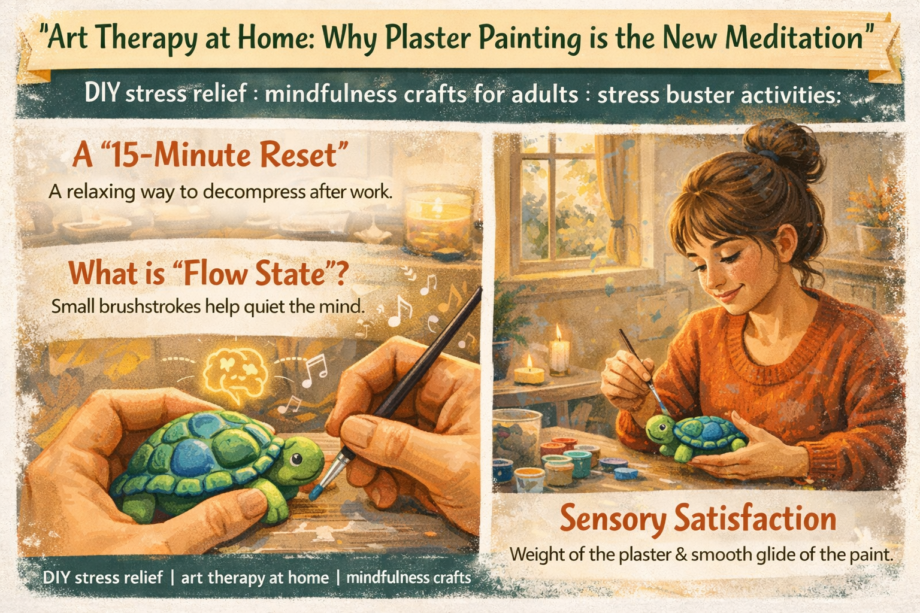
The 15-Minute Reset: Decompressing After the 9-to-5
We often bring the residue of the workday into our evenings. Instead of reaching for a screen, try a 15-minute reset.
By choosing one small plaster figure—a geometric shape, a botanical leaf, or even a simple bust—you create a physical boundary between your “work self” and your “home self.” This short window of creativity acts as a mental palate cleanser, allowing you to shed the day’s deadlines before dinner.
Finding the “Flow State”: Silencing the Worry Centre
Why does painting feel so therapeutic? It’s all about the Flow State, a psychological term for being completely immersed in an activity.
-
- Precision over Pressure: Focusing on the tiny crevices of a plaster piece requires “soft focus.”
-
- Switching Off: As you concentrate on small brushstrokes, your brain naturally down-regulates the amygdala (the brain’s “worry centre”).
-
- The Result: You aren’t “trying” to be mindful; you are simply being mindful because the task demands it.
The Sensory Satisfaction of Plaster and Acrylics
Part of the magic lies in the materials themselves. Plaster painting provides a unique sensory experience that digital hobbies lack:
-
- The Weight: There is a grounded, substantial feel to a plaster piece in your hand. It anchors you to the present moment.
-
- The Glide: High-quality acrylic paint on a smooth plaster surface offers a “frictionless” experience. The way the pigment absorbs into the porous material is deeply satisfying to watch.
-
- The Completion: Unlike a gym routine or a long-term project, you can finish a plaster piece in one sitting, providing an immediate hit of dopamine.
How to Start Your Home Art Therapy Practice
You don’t need an expensive studio to begin. All you need is a small workspace, a few primary acrylic colours, and a collection of plaster casts.
Pro Tip: Don’t worry about the final product. The goal isn’t to create a masterpiece for a gallery; the goal is the 15 minutes of quiet you find while the brush is moving.
Discover the joy of hands-on play with our eco-friendly kits. Perfect for birthdays, rainy days, or everyday unplugging.
Unplugging through tactile art is a proven way to reduce anxiety. Read more on